

Housing, Homelessness & Mental Health
(3H) Task Force

If you have questions or feedback, please email housing@cityoftulsa.org
Jump to:
Explore:


Homelessness Initiative Implementation
June 2026
-
The City Council dedicates $23.5 million for multi‑year homelessness response from the 2016 Vision Tulsa Surplus funds, including $500,000 for operating a low-barrier shelter called The Harbor.
December 2025 to June 2026
-
Safe Move Tulsa houses about 360 people since its launch, closes nine encampments and resolves street sleeping downtown. The City continues implementing Path to Home recommendations, including a low-barrier shelter and an eviction mitigation coalition.
-
At the annual Mayor/Council Retreat in February, city leaders established a collective process to monitor homelessness initiative implementation, budget reports and metrics.
-
Winter shelter outcomes are reported in March, showing 632 people served with extensive ongoing case management provided. An additional emergency shelter opened during extreme weather on the west side served 1,343 individuals.
August 2025
-
City leaders announce Safe Move Tulsa, a comprehensive plan to house about 300 individuals within nine months, coordinate encampment closures and expand low‑barrier shelter planning.
-
City Council approves $6 million for Phase 1 of Safe Move Tulsa in addition to private funding of $4 million and $1 million in philanthropic dollars.
April 2024
-
3H Task Force releases Path to Home Recommendations that prioritize outreach and early intervention such as a coordinated encampment decommissioning strategy and expansion of low-barrier sheltering options.
August 2023
-
The 3H Task Force presented nine immediate action steps as part of ongoing efforts to reduce homelessness. The action steps represent items that can increase capacity and remove barriers in shelters, provide for emergency temporary housing and improve public safety.
Housing Funds Implementation
January 2026
-
The City signed an agreement allowing the THIF to begin deploying $47 million in voter-approved housing dollars from IOT3.
December 2025
-
The City Council approved a budget action to appropriate the first allocation of IOT3 housing funds in the amount of $13.7 million.
November 2025
-
The City Council approved a Resolution to adopt an Economic Development Incentive Policy that outlines the purpose and principles of the Tulsa Housing Impact Fund (THIF).
August 2025
-
The City selected Housing Partnership Network (HPN), a national nonprofit with local experience, to lead the effort known as the Tulsa Housing Impact Fund.
April 2025
-
The Tulsa City Council began to further shape how to invest $75 million from the Improve Our Tulsa 3 (IOT3) housing package:
November 2024
-
The City adopted a Resolution establishing a project plan for the IOT3 Housing Funds after presentation and consideration of recommendations for the City's Housing, Homelessness & Mental Health (3H) Task Force. This Resolution established targets and goals for a Housing Grant Fund, Housing Investment Fund, Housing Acquisition Fund, Preservation and Rehabilitation Fund, and Infrastructure Fund.
March 2023
-
The Citywide Housing Assessment determined that 12,900 housing units are needed for populations across all income levels over the next 10 years, and that $370 million in investment is needed in addition to private market investments.
-
The Improve Our Tulsa 3 program, approved by voters in August 2023, includes $75 million for Housing Initiatives (IOT3 Housing Funds), which are projected to be collected beginning January 1, 2026.
Mental Health Initiative Implementation
August 2026
-
The City Council approved opioid settlement funds to launch a new mobile unit to close a critical gap in Tulsa’s mental health treatment system. The Forensic Assertive Community Treatment (FACT) Team will act as a dedicated intervention unit serving those with severe mental health needs, helping them avoid unnecessary emergency room and inpatient hospitalization, and repeated law enforcement responses.
April 2025
-
The City partners with Family & Children’s Services to embed mental health clinicians 24/7 inside Tulsa’s 911 Center. Over the next year, the partnership will divert more than 6,600 calls away from police, fire and EMSA, and save an estimated $450,000 in public safety resources.
August 2024
-
The City Council approved opioid settlement funding to expand the Alternative Response Team 2 (ART-2) program that focuses on mental health and homelessness outreach in Downtown Tulsa. This dedicated unit is designed to decrease the number of high utilizers of the 911 system.
May 2024
-
The City's Chief Mental Health Officer leads efforts with the Healthy Minds policy group and the First Responders Advisory Committee (FRAC), a multi-sector governing body that oversees the evaluation of the crisis response system, to adapt the system to more effectively respond to individuals in mental health crisis.
-
The City awards ARPA funding to Housing Solutions to leverage a Substance Abuse and Mental Health Services Administration (SAMHSA) grant to support street outreach programming by providing mental health resources and direct services to people experiencing unsheltered homelessness across the city of Tulsa's geographic area using a collaborative approach.
April 2023
-
Alternate Response Team 1, or ART-1, launched an innovative co-responder model that pairs a Tulsa Fire Department (TFD) paramedic with a Community Outreach Psychiatric Emergency Services (COPES) clinician to provide de-escalation and wrap-around services to those in mental health crisis citywide.
Task Force Recommendations
April 9, 2024 - Path to Home Recommendations
As part of the cumulative work being done to address homelessness at the intersection of housing and mental health, the Mayor/Council Housing, Homelessness, and Mental Health (3H) Task Force has released its Path to Home Recommendations, which include four goals and 33 actions to address community needs.
-
Goal 1: Housing Production & Preservation
-
Goal 2: Outreach & Early Intervention
-
Goal 3: Leverage & Align Funding
-
Goal 4: Community Standards & Resources

August 9, 2023 - Nine Immediate Action Steps, Council Committee Presentation
The Task Force presented a set of immediate action steps as part of ongoing efforts to reduce homelessness. The action steps represent items that can be implemented now to increase capacity and remove barriers in shelters, provide for emergency temporary housing, and improve public safety. The proposed initiatives will be funded by American Rescue Plan Act and Opioid Settlement monies. The Task Force will continue its work and make future comprehensive recommendations to meet the Task Force's mission and goals. The nine initiatives below were presented and discussed with the City Council.
-
Emergency Temporary Housing
-
Trespassing on Private Property
-
Priority Housing Placement
-
Public Right-of-Way Obstruction
-
Low Barrier Shelter
-
Private Right-of-Way Enforcement
-
Expanded Animal Accommodations
-
Mayor's Directive on Consistent Approach to Public Safety
-
Open Containers in City Parks
Task Force Meetings
Funding Sources
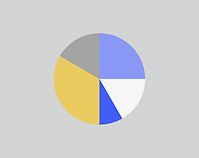
The Tulsa Housing Initiative consists of $104.2 million in one-time funds that will be deployed to support housing development in Tulsa. The March 2023 housing assessment showed a 10-year market demand of 12,900 units. More than half of the demand is for units that will be very difficult to produce without public assistance. The initiative is funded by Federal, State, and Local sources.
.png)
$104.2M
Tulsa Housing Initiative
IMPROVE OUR TULSA
$75 MILLION
Voters approved $75 million for housing initiatives in the third Improve Our Tulsa package on August 8, 2023. The City of Tulsa will begin collecting these funds at the expiration of Improve Our Tulsa 2 or December 31, 2025, depending on which of these occurs first.
Improve Our Tulsa
ARPA
ARPA
$5 MILLION
To aid in Tulsa's COVID-19 response and recovery, the U.S. Department of the Treasury awarded the City of Tulsa American Rescue Plan Act (ARPA) funds. Elected leaders in Tulsa have set aside $5 Million of Tulsa's allocation to support housing initiatives consistent with federal guidelines.
DDRF
DDRF
The Downtown Development and Redevelopment Fund promotes development in Downtown Tulsa, including catalytic mixed-use and/or preservation projects. The fund is designed to support a variety of housing types including housing that is affordable to residents with incomes at or below AMI. It is supported by separate sources of funding: 1996 City Sales Tax, 2001 City Sales Tax, 2013 IOT Sales Tax, Vision 2025 Sales Tax, and funds recovered through previous revolving loan programs.
$8.1 MILLION
AFFORDABLE HOUSING TRUST FUND
A city-wide fund for production and preservation of affordable housing through affordable rental housing development, homebuyer assistance, landlord incentives, and rental assistance. This fund was established in 2020 utilizing Vision 2025 funds. Find more information about the AHTF here.
Affordable Housing Trust Fund
$8.4 MILLION
HOME-ARP
$5 MILLION
In April 2021, the federal government announced allocations for the HOME Investment Partnerships American Rescue Plan Program (HOME-ARP) which provides funding to participating jurisdictions to reduce homelessness and increase housing stability for qualifying populations. The City of Tulsa has recommended that approximately $5 Million of the allocation be used to support the development of affordable rental housing.
Home-ARP
OPIOID SETTLEMENT FUNDS
To date, the City of Tulsa has received settlement funds from two separate settlements. Funds may provide access to housing for individuals with Opioid Use Disorder and any co-occurring Substance Abuse Disorder or Mental Health conditions. Additional funds are anticipated to be received over the next 15 years.
Opioid Settlement Funds
$2.7 MILLION
Community Meetings
Meeting information will be updated as they occur.
February 28 - Public Input
This public meeting provided information to attendees on the current state of homelessness in Tulsa, the work of the Mayor/Council task force, and was also used as a time to hear from the community to ensure the task force is aware of all considerations moving forward.


Resources




Task Force News
Task Force History
Mission: For the City of Tulsa to understand the needs of the community in addressing homelessness at the intersection of housing and mental health and create a strategy for the City to best utilize its policy and legislative powers, public convening and education platforms, and financial resources to maximize its efficiency and effectiveness in contributing to broader community solutions.
The 3H Task Force held its first meeting in January 2023 and its final meeting in October 2024. The original members, stakeholders and staff of the group were: Mayor G.T. Bynum Councilor Crista Patrick, District 3 Councilor Jeannie Cue, District 2 Councilor Lori Decter Wright, District 7 Councilor Phil Lakin, District 8 Deputy Mayor Cassia Carr James Wagner, City of Tulsa Working in Neighborhoods Director Travis Hulse, City of Tulsa Housing Policy Director Mark Smith, Housing Solutions Executive Director & CoC Lead Agency Zack Stoycoff, Healthy Minds Executive Director Michael Junk, QuikTrip Manager of Public & Government Affairs Tom Biolchini, 2023 Tulsa Regional Chamber Chairman Blake Ewing, Mayor’s Office Chief of Staff Sarah Davis, Council Administrator